Key Takeaways
- Blending code, art, and emerging hardware produces experiences that traditional design workflows simply cannot replicate on their own.
- Adoption of AI across creative teams has roughly doubled since 2022, signaling a permanent shift rather than a passing trend.
- Hybrid skill sets, where practitioners understand both aesthetics and engineering logic, are becoming the baseline for competitive studios.
- Immersive formats like AR, VR, and projection mapping are moving from novelty experiments into mainstream brand and product work.
- Rapid prototyping tools let teams test risky ideas cheaply before committing to full production budgets.
- Ethical questions around authorship, data use, and accessibility now sit at the center of forward-looking studio practice.
- Choosing between code-first, no-code, and hybrid approaches depends on project scope, team maturity, and long-term maintenance plans.
The Shifting Ground Beneath Modern Design
Walk into any serious design studio today and you will notice something strange. The traditional divide between the person sketching ideas and the person building them has nearly vanished. Designers are writing scripts. Developers are picking color palettes. The old job titles still exist on business cards, but the actual work has blurred into something new.
This shift did not happen overnight. It built up slowly over a decade, driven by cheaper hardware, friendlier programming languages, and a new generation of practitioners who refused to pick a lane. The result is a working environment where craft and computation live side by side, each shaping the other.
Understanding this change matters because it affects how teams hire, how projects get scoped, and what clients expect when they commission work. The studios ignoring it are starting to feel outdated. The ones leaning in are redefining what good design looks like.
So What Is Creative Technology, Really?

The simplest honest answer is that it sits at the intersection of art, code, and physical or digital experience. According to SMU Meadows School of the Arts, the discipline centers on using novel digital tools to build immersive experiences that serve both artistic and commercial goals. That definition is broad on purpose, because the field itself refuses to sit still.
When people ask what is creative technology in day-to-day terms, the answer usually involves specific projects: an interactive window display that reacts to passersby, a generative identity system that produces thousands of unique logo variations, a VR training module for surgeons. These examples share a common thread. Each uses software or hardware to make something that could not exist through static design alone.
Why the Label Keeps Expanding
The term has grown because the toolkit has grown. Ten years ago, the field mostly meant Flash animators and interactive agencies. Today it covers machine learning pipelines, haptic interfaces, spatial computing, and biometric-driven installations. The expansion is not just marketing hype. New hardware categories keep arriving, and someone has to design the experiences that run on them.
Comparing the Three Dominant Approaches
Studios tend to settle into one of three operating models, each with real trade-offs that shape everything from hiring plans to pitch decks. Picking the wrong one for your team can waste months of effort and burn through goodwill with clients, and in the worst cases it quietly erodes the kind of reputation that took years to build. The choice usually reflects a studio’s origin story more than a deliberate strategy: shops founded by engineers lean one way, shops founded by art directors lean another, and the ones founded by producers often end up somewhere in between.
- Code-first approach: engineers lead, designers advise, output is highly custom and performant but slower to iterate, which suits launches where the brand expects a signature moment rather than a steady feed of updates
- No-code and low-code approach: designers lead using platforms like Figma, Framer, and Webflow, output ships fast but hits ceilings on complex interactions, especially anything involving real-time data, custom shaders, or non-standard input devices
- Hybrid approach: paired teams work in parallel, with shared prototyping tools and a middle layer of generalists who translate between disciplines, often described internally as creative technologists or design engineers
- Vendor-first approach: outsource the technical layer entirely, keeping internal focus on concept and art direction, which works well for boutique studios that would rather stay small than staff up for every new discipline
- Research-led approach: start with user studies and build only what evidence justifies, slower but reduces waste, and particularly valuable in regulated sectors like healthcare, finance, and public services
The hybrid model has become the most common choice for mid-sized studios, mostly because it balances speed with ambition and makes it easier to pitch a wide range of work without pretending to be experts in everything. Code-first still dominates at agencies serving industries like automotive or luxury retail, where polish matters more than turnaround and a six-month build is considered reasonable. No-code wins when budgets are tight and timelines are brutal, which describes most startup marketing pages, event microsites, and campaign landing experiences that need to go live before a keynote. Understanding what is creative technology in practice often means recognizing that these models are not fixed identities but postures a studio adopts for a given project, sometimes shifting mid-engagement when scope changes.
The Hidden Cost of Each Path
Every approach carries a maintenance tax that only shows up months later, long after the launch party is forgotten and the case study is already published. Custom code needs engineers who remember how it was built, and when those engineers leave, the knowledge often walks out with them unless documentation was treated as a first-class deliverable rather than a nice-to-have. No-code platforms raise prices and change features, sometimes deprecating the exact integrations a project depends on, which can force an emergency rebuild on a budget that was never scoped for one. Hybrid teams require constant communication overhead, with standups, handoffs, and translation meetings that can quietly consume a quarter of billable hours if left unmanaged. Vendor relationships introduce contract risk and knowledge gaps, while research-led work can stall when stakeholders lose patience waiting for evidence. Smart studios factor these ongoing costs into their initial proposals, not as surprises at renewal time, and the best creative technology teams treat maintenance as part of the craft rather than an afterthought.
How AI Is Rewriting the Playbook
Artificial intelligence has moved from novelty to core infrastructure faster than anyone predicted. According to World Metrics, nearly three-quarters of creative professionals now rely on AI tools, a sharp climb from the forty-one percent recorded in 2022. That kind of adoption curve is unusual, and it signals that AI is not optional for teams hoping to stay competitive.
The tools show up at every stage. Research teams use large language models to synthesize interview transcripts. Visual designers generate mood boards and texture variations. Motion designers prompt their way to rough animations before refining by hand. Each use case replaces hours of manual labor with minutes of guided iteration.
But the picture is not uniformly rosy. Figma’s design research found that during the discovery phase, thirty-eight percent of designers and forty-three percent of developers turn to AI for customer research tasks. Those numbers reveal both an opportunity and a gap. Developers are adopting AI research tools slightly faster than designers, which suggests the design side still has room to integrate these tools earlier in the process.
Skills That Separate Working Practitioners from Hobbyists
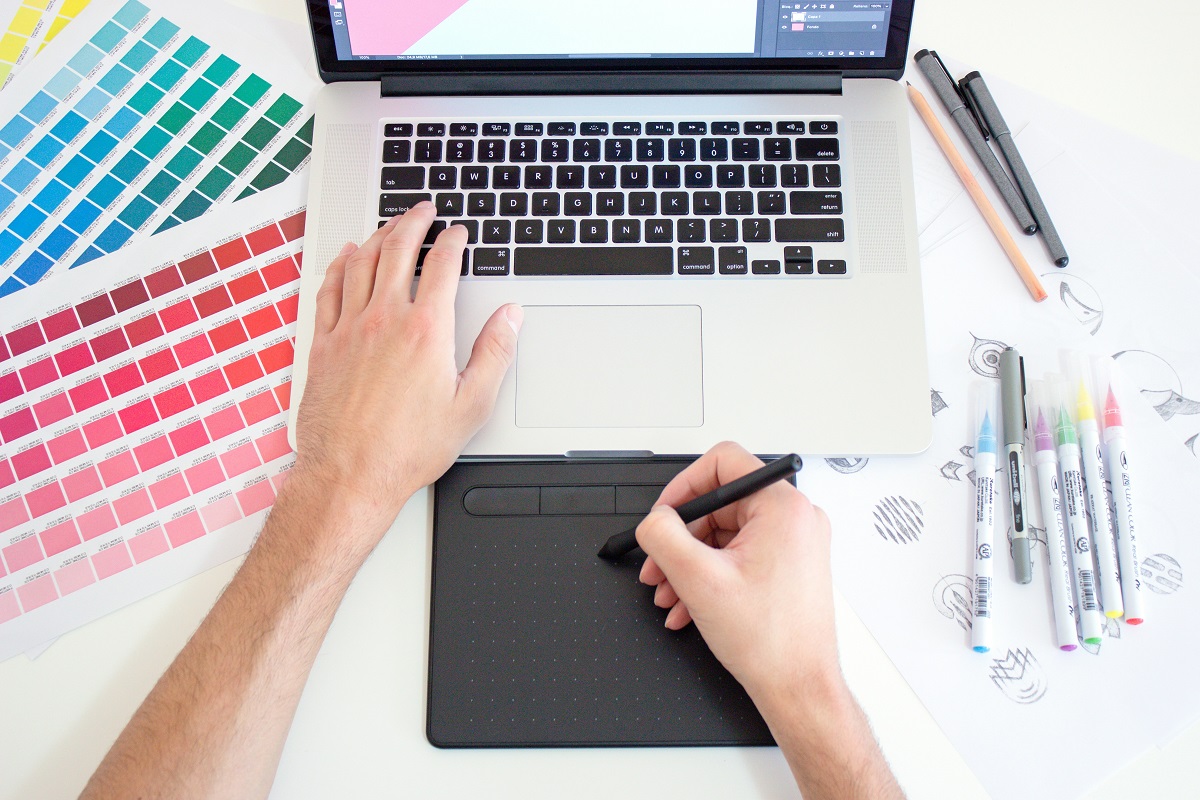
The skill map for people entering this field has shifted considerably. Pure visual craft is still essential, but it is no longer sufficient on its own. Studios want people who can prototype in multiple mediums and talk fluently with engineers, strategists, and clients.
- Fluency in at least one scripting language, usually JavaScript or Python
- Comfort with version control systems like Git, not just file naming conventions
- Working knowledge of a 3D tool such as Blender, Cinema 4D, or Spline
- Prompt engineering skills for guiding generative AI outputs
- Basic understanding of accessibility standards and inclusive design principles
- Ability to translate ambiguous briefs into testable prototypes within days
Market data backs this up. Research from Limelight Digital shows that Figma proficiency now appears in two-thirds of design job listings, while motion design shows up as a requirement in nearly half of senior role postings. The baseline keeps rising. What was once considered a specialist skill has become table stakes.
For people considering this path, the good news is that the entry points are wider than ever. Many practitioners build their foundation through self-directed study and project work, and the available careers in digital art span everything from game studios to broadcast design to experiential marketing. The field rewards breadth almost as much as depth.
Weighing Immersive Formats Against Flat Design
Not every project needs headsets or spatial computing. One of the most common mistakes studios make is reaching for immersive formats when a well-crafted web page would do the job better. The comparison matters because immersive work costs more, takes longer, and requires specialized distribution.
Flat design stillwins when the goal is information transfer, broad reach, or search discoverability. A product page, a documentation site, a campaign microsite—these benefit from speed, clarity, and standard web conventions. Users arrive with intent and want to leave with answers. Adding a 3D scene or a WebGL shader can actively hurt conversion if it slows load times or distracts from the primary task.
Immersive formats earn their keep when the experience itself is the point. Training simulations, location-based brand activations, museum installations, and architectural walkthroughs all gain something real from spatial presence. The user is not trying to complete a task quickly. They are trying to feel something, learn something embodied, or remember a brand moment that a banner ad could never deliver.
A Practical Decision Framework
Before committing to an immersive build, teams should pressure-test the brief against a few blunt questions. Will users have the required hardware, or will the studio need to supply it? Does the content justify the production cost per impression? Can the core message survive if the immersive layer fails to load or render? If any answer is shaky, a flat format is usually the safer bet.
Ethics, Authorship, and the Questions No One Wants to Answer
The faster the tools move, the louder the ethical questions get. Studios building with generative models face real uncertainty about training data provenance, output ownership, and the labor implications of automating junior tasks. Pretending these questions do not exist is no longer a tenable position with clients, employees, or regulators.
Authorship is the thorniest piece. When a designer prompts a model trained on millions of uncredited images, who owns the result? Legal frameworks vary by jurisdiction and keep shifting. The pragmatic answer most studios have settled on is transparency: document which tools touched which deliverables, keep human judgment in the loop on final decisions, and negotiate rights explicitly in client contracts rather than assuming defaults.
Accessibility deserves equal weight. Interactive and immersive work often ships with weaker accessibility support than standard web content, partly because the tooling is immature and partly because teams forget to budget for it. Building inclusive experiences from the start is cheaper than retrofitting them, and it protects studios from reputational and legal risk down the line.
Building a Studio Practice That Lasts
Longevity in this field comes from infrastructure, not individual heroics. The studios still thriving after a decade have invested in internal systems that outlive any single project or hire. Component libraries, prompt libraries, shared prototyping environments, and documented post-mortems compound over time in ways that one-off brilliance cannot.
- Maintain a living pattern library that captures reusable interactions, not just visual components
- Run monthly experiments with new tools, time-boxed to prevent rabbit holes
- Pair senior and junior practitioners on every project to transfer tacit knowledge
- Keep a public-facing portfolio current, since recruiting is itself a design problem
- Build client education into the sales process so expectations match delivery
The studios that skip these steps tend to burn out their best people and lose institutional memory every time someone leaves. Treating practice-building as a design project in itself is what separates sustainable operations from the ones that flame out after a strong first few years.
Closing Thoughts
The field has outgrown its old definitions, and that is a healthy sign. What used to be a niche specialty handled by a small group of technical designers has become a core competency across the entire industry. Teams that treat computation, immersion, and generative tools as part of their standard vocabulary are producing work that resonates further and lasts longer than teams still working in strictly separated disciplines.
None of this means the fundamentals have changed. Good taste, careful research, and clear communication still determine whether a project succeeds or fails. The tools have expanded dramatically, but they amplify judgment rather than replace it. A beautifully coded installation built on a weak concept is still a weak project. The craft now simply spans more mediums, and the people who can move between them hold a real advantage.
For anyone building a career or a studio in this space, the honest advice is to stay curious without chasing every shiny release. Pick a few tools deeply, understand the ethical weight of what you ship, and keep investing in the human relationships that make collaborative work possible. The technology will keep shifting. The practitioners who adapt without losing their point of view will keep finding meaningful work.